An independent guide to the culture, places and craft of Turkey
Food & Table
How a Turkish Breakfast Is Actually Built
Not a dish but a table — and an order to how it is assembled
By the ReaderFood & Table6 min readLiving layer
01The Logic Before the Food
The Turkish breakfast — kahvaltı, literally "before coffee," though this etymology now contains its own joke, since tea dominates the whole affair — is not a meal in the European sense of a unified plate. It is a table assembled in layers, each element placed with intention, the whole thing designed to last. Getting it right means understanding the logic underneath the spread before you understand the individual components.
The key distinction is between a kahvaltı assembled at home on an ordinary morning and the full ceremonial version served in eastern Turkey, particularly in Van, which has become the benchmark against which all others are measured. The Van breakfast is not a regional variation so much as the fully articulated form of the thing — the version in which every element is present and the architecture of the table is most legible. What most people encounter in Istanbul hotels or Aegean guesthouses is an edited version of the same grammar.
That grammar works as follows: the table begins with the cold, brined and preserved; moves through the fresh and the dairy; arrives at the egg, which is the only hot element in a traditional spread; and runs alongside all of this with the bread, which is not accompaniment but structure. The tea pot is never absent. The meal is not sequential — everything arrives at once — but there is still an order to how you eat through it, and that order is worth knowing.
02Cold, Brined, Preserved: The Foundation Layer
Every serious Turkish breakfast table begins with a group of elements that provide the sharp, salty, acidic notes against which everything else is measured. This is not antipasto and it is not a cheeseboard — it is the foundation layer, and its job is flavour geometry.
Olives come first in any accounting, and they are non-negotiable. Black olives — cured and wrinkled, often from the Marmara town of Gemlik or from the groves around Edremit on the Aegean — carry a deep bitterness that has been pulled back by salt and time. Green olives, cracked and dressed with chilli and herbs, are sharper and oilier. A properly assembled table offers both. The olives are not decorative; they are the recurrent bass note you return to throughout the meal, between bites of egg, after a mouthful of cream, to reset the palate.
Alongside the olives: domates (tomato, always sliced, not dressed) and salatalık (cucumber), which in Turkey is a breakfast vegetable with the same standing as bread. Both are present for freshness and a clean water-content that cuts through the heavier dairy elements. A little tray of roasted or fresh peppers may appear, as may sucuk — a spiced beef sausage, heavily scented with cumin and garlic — though the sausage is more properly a cooked element when it appears fried alongside an egg.
The preserved layer extends further in a traditional spread. Pastırma, air-dried cured beef pressed with a crust of çemen (a spiced fenugreek paste), arrives in thin dark slices. It is an ancient Anatolian preservation method, and the smell alone — pungent, complex, faintly medicinal — announces its character before you taste it. Turşu, pickled vegetables, offer vinegary counterpoint; they may be cucumbers, green tomatoes, peppers or cabbage, depending on the season and the region.
The egg is the hot centre and the only truly cooked item on a traditional breakfast table.
By the numbers
20–30 small dishesnumber of dishes
03Dairy and Honey: The Middle Ground
If the cold layer is sharp, the dairy layer is the opposite register — mild, rich, coating — and the interplay between the two is what makes the table hold together over the course of an hour.
White cheese (beyaz peynir) is the central dairy element. Made from sheep's, cow's or mixed milk and brined in salt water, it is Turkey's equivalent of feta in the sense of ubiquity, though the family of white cheeses is broader and more varied than that comparison suggests. At its best, from small producers in the Aegean or the Black Sea highlands, beyaz peynir is dense without being rubbery, salty without the brine having overwhelmed the milk. A younger, softer version is milder; an aged one can be sharp enough to rival a medium hard cheese from elsewhere.
Alongside it, or in place of it at a more abundant table: kaşar, a pale yellow semi-hard cheese made from cow's, sheep's or mixed milk with a clean, slightly buttery flavour that toasts beautifully — though at breakfast it appears fresh, sliced thin. Lor, a whey cheese that resembles ricotta in texture and mild sweetness, often appears in the Van spread alongside otlu peynir, a herb cheese from the same region in which wild mountain herbs — most distinctively, sirmo, a kind of wild garlic — are folded into the curd. The herbs speckle the cheese and carry the landscape in the taste.
Cream — specifically kaymak, clotted cream made by slowly simmering buffalo or cow's milk and lifting the fat skin — sits at the sweet end of the dairy layer. It is almost always accompanied by honey, ideally a single-varietal or mountain honey with some character. Kaymak with honey is the indulgent centre of the table and one of the great small pleasures in Turkish food. The combination has a richness that a simple pastry would not achieve, and it is traditionally eaten with pide or lavaş rather than toast.
Tahini with grape molasses (üzüm pekmezi) is a variation on the same sweet-fatty idea — the sesame paste and the molasses are swirled together on the plate and eaten with bread. In southeast Anatolia, this combination is more common than kaymak; in Istanbul, both appear.
04Egg, Bread and Tea: The Architecture
The egg is the hot centre and the only truly cooked item on a traditional breakfast table. Sahanda yumurta — eggs fried in butter in a small copper or cast-iron pan, which arrives at the table still sizzling — is the purest form. A fried egg cooked in clarified butter in such a pan absorbs a quality that a non-stick pan will not produce: crisp, lacey edges, a just-set yolk, and a slight richness from the butter that holds throughout. The pan itself, sahan, gives the dish its name.
Menemen belongs to a parallel tradition — eggs scrambled with tomato, green pepper and sometimes onion in olive oil — and occupies the territory between breakfast and a light meal. It is cooked in a wide pan and brought to the table in it. Some insist that onion does not belong in the dish and that the tomato should not reduce to a sauce; these are positions held with considerable feeling. Çılbır, poached eggs over garlicked yoghurt with a drizzle of chilli butter, appears less commonly at breakfast and more at brunch, but it has old Ottoman lineage.
Bread runs underneath everything. Simit — the sesame-encrusted ring bread sold from carts across every Turkish city — is the bread of the street breakfast, eaten with cheese or kaymak or just by itself. In a sit-down spread, taze ekmek (fresh white bread) or pide does the work: it is the vehicle, the utensil, the palate cleanser between tastes. Bread is not optional and it is not decorative.
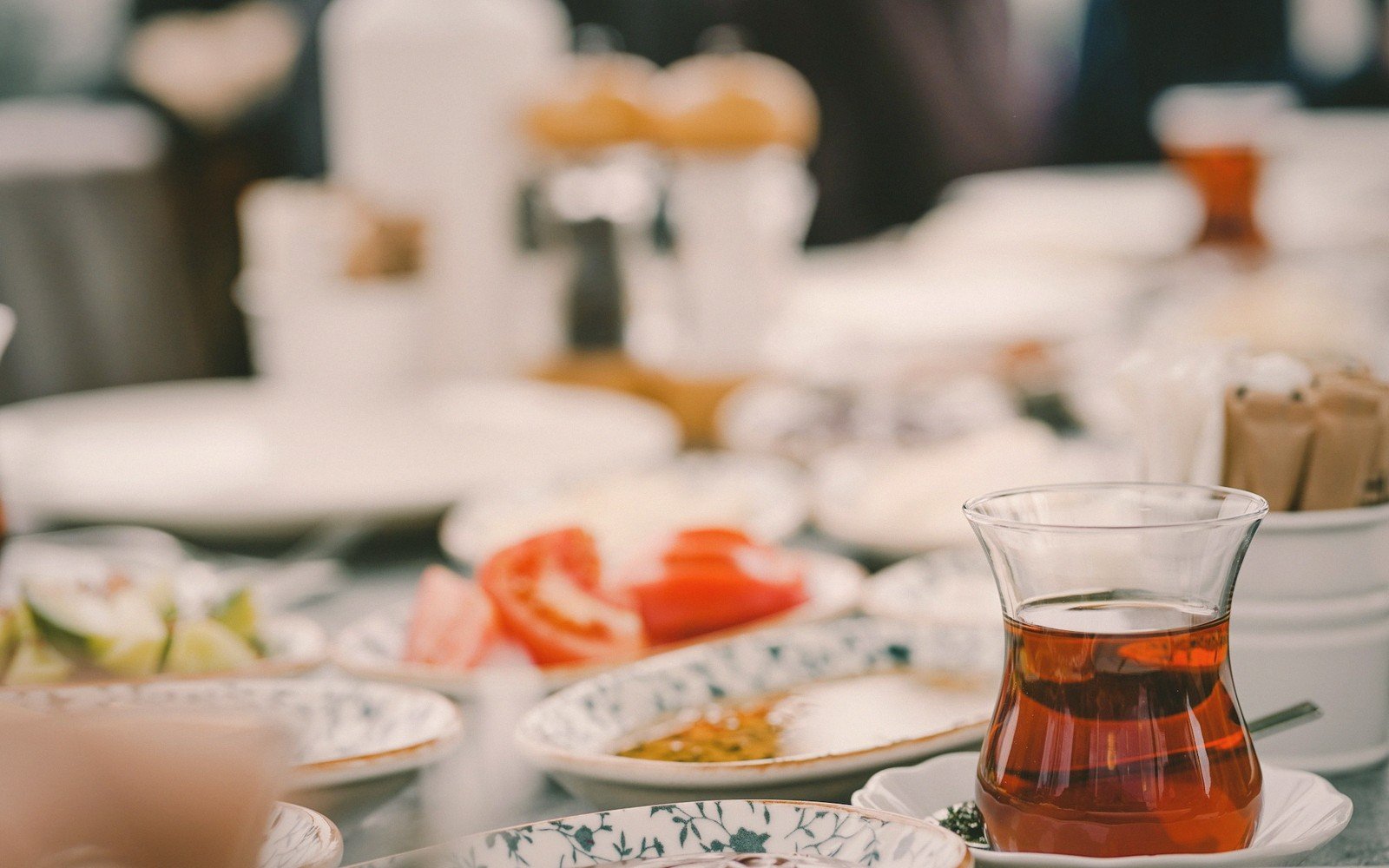
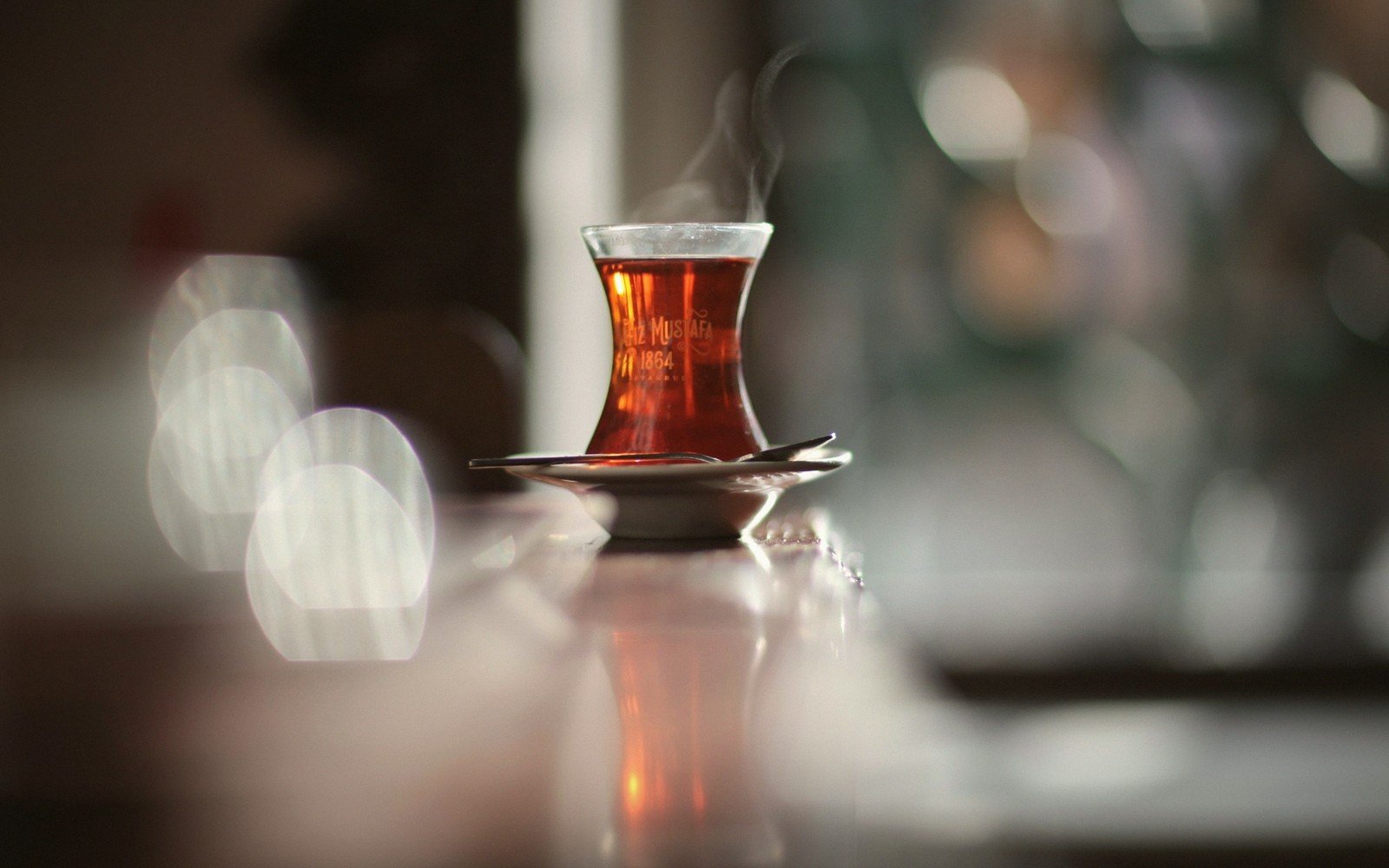
The tea — as discussed elsewhere in the guide — is brewed in the double-stacked çaydanlık and served in the slender waisted glass throughout the meal, refilled continuously. Çay is not served at the start and then cleared; it runs parallel to the table from the first moment to the last, and the meal does not formally end until the tea does. Coffee, if it comes, comes after, and then the morning is over.
05What the Table Is For
A Van breakfast, properly laid out, can run to twenty or thirty small dishes on a table crowded with ceramic and copper. This is not excess for its own sake. The logic is sociability: a table that takes an hour to eat gives people something to do while they talk. The variety means there is no single main event to wait for and no moment when the meal is definitionally over. You graze, you return, you pour more tea.
The structure — cold and preserved, dairy and sweet, egg and bread — repeats whether the table has eight elements or thirty. Understanding the architecture means you can read any version of the meal, from a highway rest stop to a rooftop hotel in Cappadocia, and know exactly what you are looking at.
map-slot
Locator for Gaziantep — real geometry, true coordinates.
Gaziantep on the map of pinned sites. Drawn from the supplied Natural Earth geometry at true coordinates — nothing here is sketched. Every guide carries a pin and a layer, so a place can be found by where it is or by when it is.
Named in this guide
Van
City in eastern Turkey; home of the benchmark regional breakfast.
Gemlik
Marmara town known for its black olives, a breakfast staple.
Edremit
Aegean coastal area renowned for olive production.
Words used above
kahvaltı
Turkish breakfast; literally "before coffee"
beyaz peynir
white brined cheese made from sheep's or cow's milk
kaymak
clotted cream made by simmering milk and skimming the fat skin
sucuk
spiced, dried beef sausage seasoned with cumin and garlic
pastırma
air-dried cured beef with a spiced fenugreek crust
çemen
spiced fenugreek paste used to coat pastırma
turşu
pickled vegetables, served as a sharp breakfast condiment
sahanda yumurta
eggs fried in butter in a small copper or cast-iron pan
menemen
eggs scrambled with tomato, green pepper and olive oil
çılbır
poached eggs over garlicked yoghurt with chilli butter
simit
sesame-encrusted ring bread, a staple of the street breakfast
otlu peynir
herb cheese from Van, made with wild mountain herbs
üzüm pekmezi
grape molasses, paired with tahini as a breakfast spread
sahan
small copper or cast-iron pan; gives sahanda yumurta its name