The Summit of Commagene
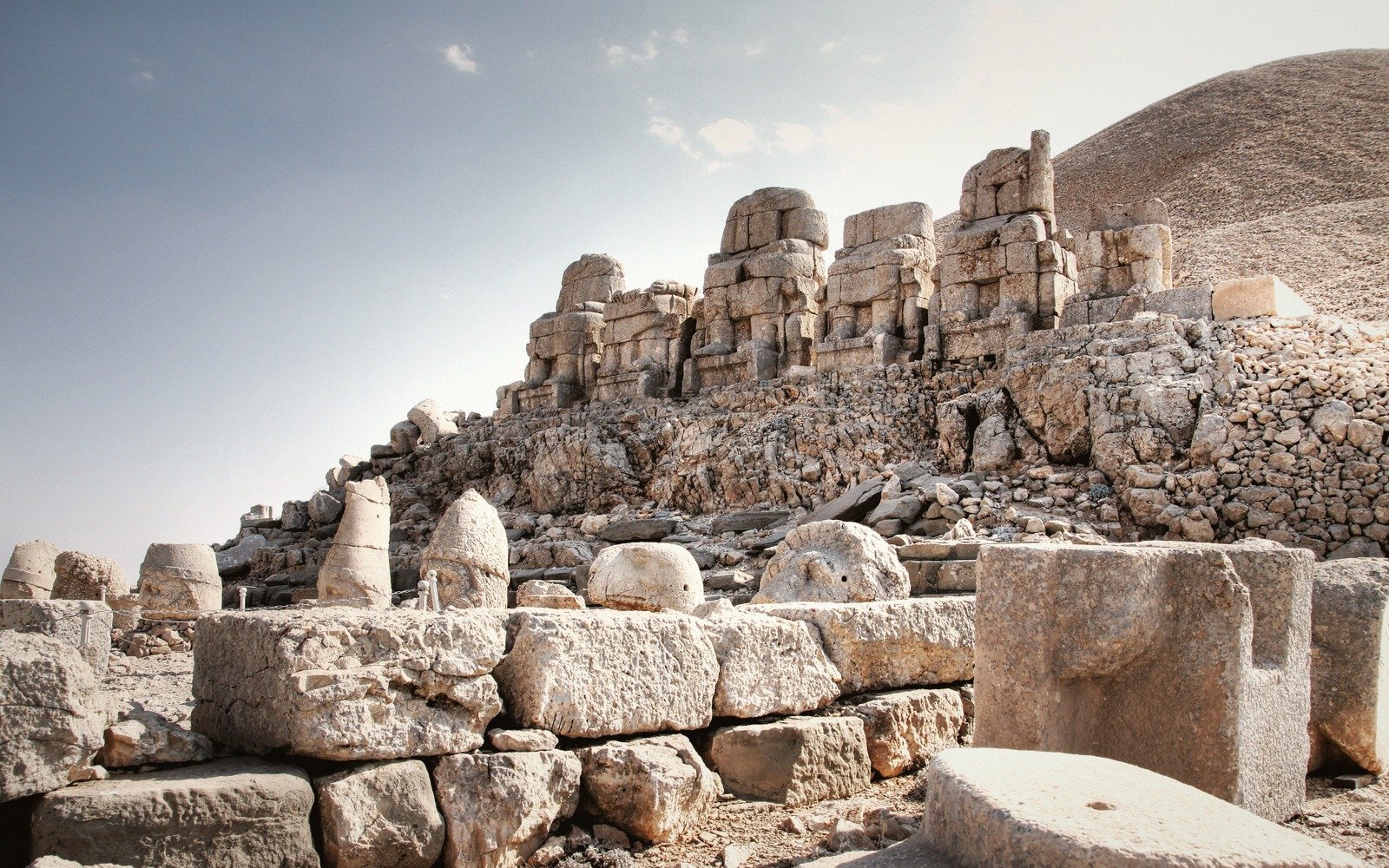
In the first century BCE, a minor king named Antiochus I of Commagene had himself buried — or perhaps entombed in effigy — beneath a massive tumulus of loose stone chips on a peak in the Anti-Taurus range, at around two thousand metres above sea level. The site is Mount Nemrut, and the heads that sit in the rubble today are the toppled upper portions of colossal seated statues that once flanked two terraced sanctuaries, east and west.
Antiochus was unusual in his ambitions. Commagene was a small Hellenistic kingdom wedged between the Greek-influenced west and the Iranian east, and its king reflects exactly that: the statues depicted him alongside a syncretised pantheon — Apollo-Mithras, Zeus-Oromasdes, Heracles-Artagnes — an invented theology that blended Greek and Persian divine traditions into something uniquely his own. Antiochus left inscriptions in Greek declaring the site a hierothesion, a sacred tomb-sanctuary, and instructing future generations to celebrate festivals in his honour.
The seated figures originally stood several metres tall, their heads crowned with Armenian-style tiered headdresses. Earthquakes — common enough across Anatolia — brought the heads down onto the terrace floors, where they have remained, expression intact, gazing across a landscape they have not quite left. The limestone weathers slowly at altitude; the monumental scale has kept them legible for two millennia.
UNESCO inscribed Nemrut Dağı as a World Heritage Site in 1987. The summit draw is as theatrical as any in Anatolia: the heads, the tumulus, and the sheer strangeness of a king who built his own legend into a mountaintop and then waited there for history to catch up.
The seated figures originally stood several metres tall, their heads crowned with Armenian-style tiered headdresses.